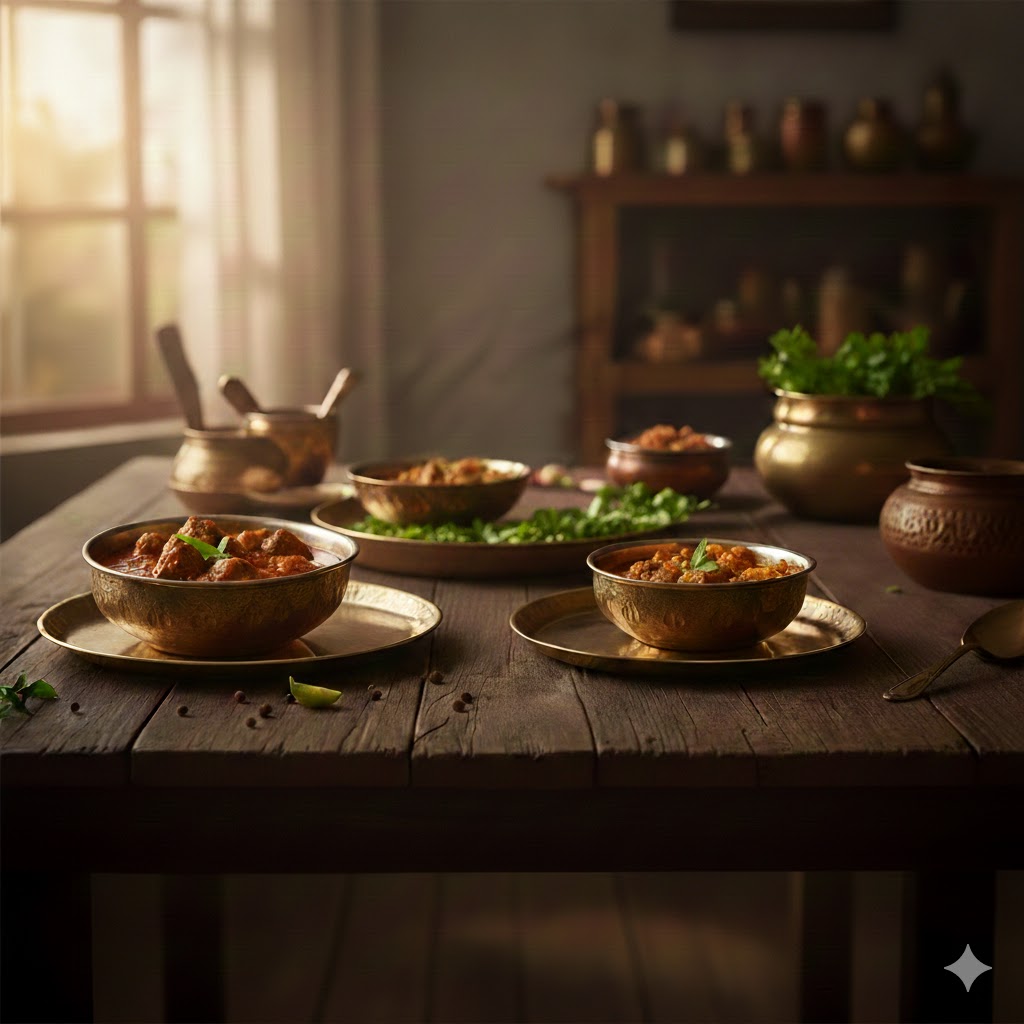
In traditional Maharashtrian kitchens, long before standardized gram scales and measuring cups became common, cooking was guided by inherited wisdom, instinct, and a set of beautifully simple measurement vessels. These utensils were not merely tools; they reflected a way of life rooted in precision, sustainability, and rhythm. Passed down through generations, they formed an essential part of household management and culinary tradition across Maharashtra’s towns and villages.
One of the most commonly used measurement units was the “Sher” (शेर). Derived from older Indian trade systems, a sher was widely used to measure grains such as rice, wheat, jowar, and pulses. In many homes, brass or copper containers were calibrated to hold exactly one sher or half-sher. These were sturdy, often cylindrical vessels, sometimes engraved or marked at the rim to indicate the quantity. The size could slightly vary regionally, but within a household, it remained consistent, ensuring uniformity in cooking and storage.
Below is a rough estimate of old measuring vessels commonly used for grains and water.:
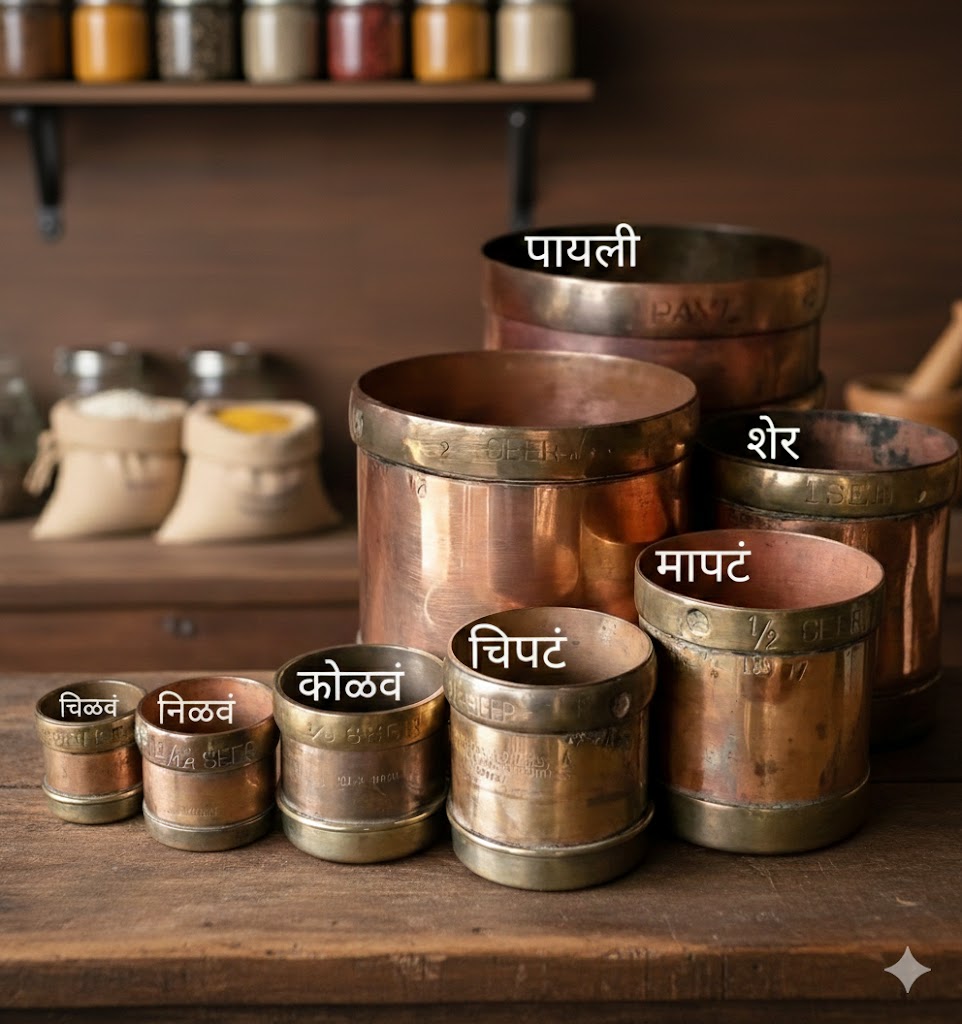
1, Paili = 2 liters = 2000 grams
2. Aaisari = 1 liter = 1000 grams
3. 1 Sher = 0.5 liters = 500 grams
4. 1 Mapatе = 250 ml = 250 grams
5. 1 Chipat = 100 ml = 100 grams
6. 1 Kolwan = 50 ml = 50 grams
7. 1 Nimbal = 20 ml = 20 grams
8. 1 Vinl = 10 ml = 10 grams
The weight is assumed on the basis of density of water i.e. 1 ml = 1 gm